
Does Your Truck Need Axle Repair in Fontana, CA? Here's How to Tell
Think your truck may have axle trouble? Learn the warning signs of axle damage, from vibrations and gear oil leaks to uneven tire wear and steering issues. Discover what causes axle problems, why fast repairs matter, and how to avoid costly driveline failures.
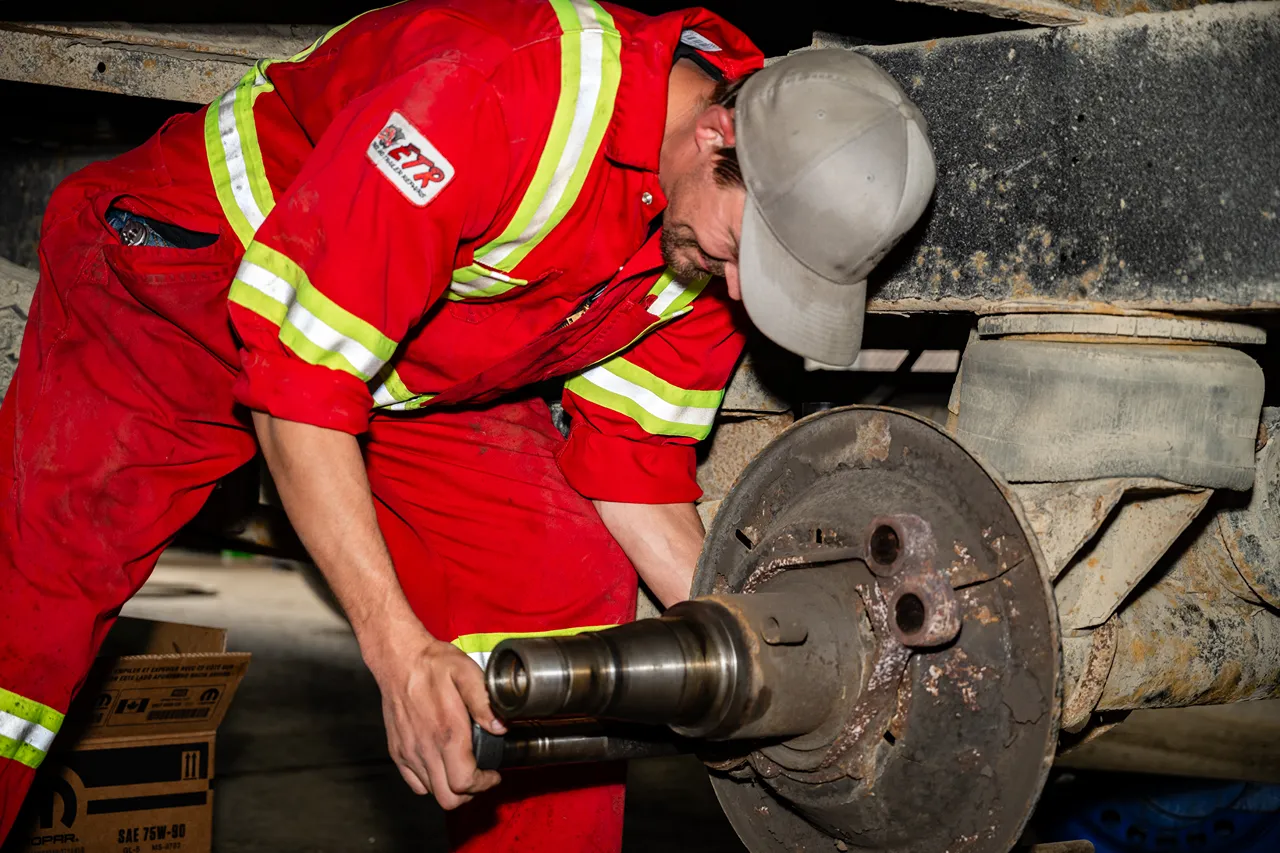
If your truck is vibrating, making clunking noises, leaking differential fluid, or wearing tires unevenly, it may need axle repair. Ignoring these warning signs can lead to serious driveline damage, unexpected downtime, and even a complete axle failure.
Whether you're hauling freight between the Inland Empire logistics hubs, making deliveries near Ontario International Airport, or running routes through Rancho Cucamonga, Rialto, Bloomington, and Ontario, your axles endure tremendous stress every mile.
If you regularly travel through Fontana, CA, especially along I-10, I-15, SR-60, or SR-210, catching axle problems early can save you thousands in repairs and keep your truck safely on the road.
Common Signs Your Truck Needs Axle Repair
Excessive Vibrations While Driving
One of the earliest warning signs of axle damage is vibration.
If your truck begins shaking more than usual, especially under acceleration or while carrying a load, the axle may be bent, worn, or suffering from internal damage.
Unlike normal road vibration, axle-related vibrations often:
- Become worse at highway speeds
- Increase under heavy loads
- Feel concentrated beneath the cab or rear of the truck
Drivers hauling along I-10 or climbing grades near SR-210 may notice these vibrations becoming much more pronounced due to increased drivetrain stress.
Clunking or Knocking Noises
Your truck shouldn't make loud clunks when shifting into gear or accelerating.
A damaged axle shaft, worn splines, failing U-joints, or excessive differential wear can create noticeable knocking sounds whenever torque is applied.
These noises often become more noticeable when:
- Pulling away from a stop
- Shifting gears
- Making tight turns
- Accelerating onto highways like I-15
Ignoring these sounds allows wear to spread throughout the entire driveline.
Uneven Tire Wear
Uneven tire wear isn't always an alignment issue.
A damaged axle can prevent the wheels from rotating correctly, causing unusual tread wear patterns such as:
- One-sided wear
- Feathering
- Cupping
- Rapid shoulder wear
If you're replacing tires more frequently than expected, your axle assembly should be inspected before installing another expensive set.
Leaking Differential Fluid
Many axle problems actually begin with lubrication issues.
Your differential relies on gear oil to lubricate its gears and bearings. When axle seals fail, gear oil can leak out, leaving the differential with insufficient lubrication.
Watch for:
- Oil spots beneath the axle
- Wet differential housing
- Strong gear oil odor
- Greasy buildup around the wheel ends
Without proper lubrication, friction increases dramatically, accelerating wear on bearings, gears, and axle shafts.
Steering Feels Unstable
If your truck suddenly feels loose, wanders across the lane, or requires constant steering corrections, an axle or suspension issue may be developing.
Drivers often describe it as:
- Truck pulling to one side
- Wandering at highway speeds
- Delayed steering response
- Poor stability while loaded
These symptoms become especially dangerous when hauling heavy freight through busy Fontana Truck Center traffic or navigating congested sections of SR-60.
Clicking or Grinding Sounds During Turns
Grinding or clicking while turning often points toward worn axle components or damaged wheel bearings.
Bearings allow your wheels to rotate smoothly while supporting tremendous loads. As bearings wear out, friction increases significantly, producing grinding noises and excessive heat.
If left untreated, a failed bearing can seize or even allow the wheel assembly to become compromised, making immediate inspection essential.
What Causes Heavy-Duty Axle Damage?
Heavy-duty axles are built to withstand incredible punishment, but they're not indestructible.
Several conditions can accelerate wear.
Overloaded Trucks
Repeatedly exceeding your truck's weight limits places enormous stress on:
- Axle shafts
- Bearings
- Differential gears
- Suspension components
Overloading shortens the lifespan of the entire driveline.
Rough Roads
The Inland Empire experiences heavy commercial traffic every day.
Constant exposure to:
- Railroad crossings
- Construction zones
- Deep potholes
- Uneven pavement
can gradually bend axle components or accelerate bearing wear.
Poor Lubrication
Differentials rely on clean, properly filled gear oil to protect internal gears from friction.
Old, contaminated, or low lubricant allows metal-to-metal contact, rapidly damaging expensive drivetrain components. Regular fluid inspections are a key part of preventive maintenance.
Collisions and Impact Damage
Even minor accidents can bend an axle housing.
Hitting curbs, loading docks, or road debris may not seem serious initially, but even slight misalignment can create long-term driveline problems.
Why You Shouldn't Ignore Axle Problems
Continuing to drive with axle damage almost always makes repairs more expensive. A worn axle often damages surrounding components.
Ignoring repairs can lead to:
- Differential failure
- Bearing destruction
- Driveshaft damage
- Suspension wear
- Wheel-end failures
- Complete loss of power to the wheels
What starts as a relatively straightforward axle repair can eventually become a complete driveline rebuild.
Preventing Costly Axle Repairs
Routine inspections remain the best defense against expensive failures.
Professional technicians should regularly inspect:
- Axle seals
- Wheel bearings
- Differential fluid
- Driveshaft components
- U-joints
- Suspension mounts
Preventive maintenance helps identify small problems before they become major roadside breakdowns, reducing downtime and repair costs.
Drivers operating daily between Fontana, Ontario, Rancho Cucamonga, Bloomington, and Rialto put significant mileage on their trucks every week. Scheduling regular driveline inspections is far less expensive than dealing with a catastrophic axle failure on the side of I-10 or I-15.
Trust OnSite Truck & Equipment Repair for Axle Repair in Fontana, CA
If you've noticed vibrations, unusual noises, leaking gear oil, or handling issues, don't wait until your truck is sidelined. Our experienced team at OnSite Truck & Equipment Repair in Fontana, CA, provides professional semi truck axle repair, driveline diagnostics, and heavy-duty truck repairs to keep your equipment operating safely and reliably.
Whether you're working near the Kaiser Steel area, servicing customers around Fontana Truck Center, or moving freight throughout the Inland Empire, prompt axle repairs can help minimize downtime and protect your investment.
When it comes to your truck's driveline, catching problems early is always the smartest route. A professional inspection today could prevent a major breakdown tomorrow.
FAQs
How long do heavy-duty truck axles typically last?
Heavy-duty truck axles can last hundreds of thousands of miles when properly maintained. Regular inspections, gear oil changes, and prompt repairs to bearings or seals help maximize their lifespan and reduce the risk of unexpected failures.
Can I keep driving with a damaged axle?
Driving with a damaged axle is never recommended. Even minor axle damage can quickly spread to the differential, wheel bearings, or driveshaft, increasing repair costs and creating a serious safety hazard.
What causes axle seals to leak?
Axle seals commonly leak because of normal wear, contaminated gear oil, damaged bearings, overheating, or excessive vibration. Replacing worn seals early helps protect the differential from lubrication loss and internal damage.
How often should heavy-duty truck axles be inspected?
Axles should be inspected during routine preventive maintenance, and anytime you notice unusual noises, vibrations, steering issues, or fluid leaks. Regular inspections help catch minor problems before they become major driveline repairs.
More Articles
.webp)
.webp)
%20(2).webp)
Contact OnSite Truck & Equipment Repair
Need roadside assistance, have questions, or want to schedule your truck or trailer in for service in Fontana, CA? Get in touch with OnSite Truck & Equipment Repair, we're open Monday through Friday from 7:00am to 4:00pm.